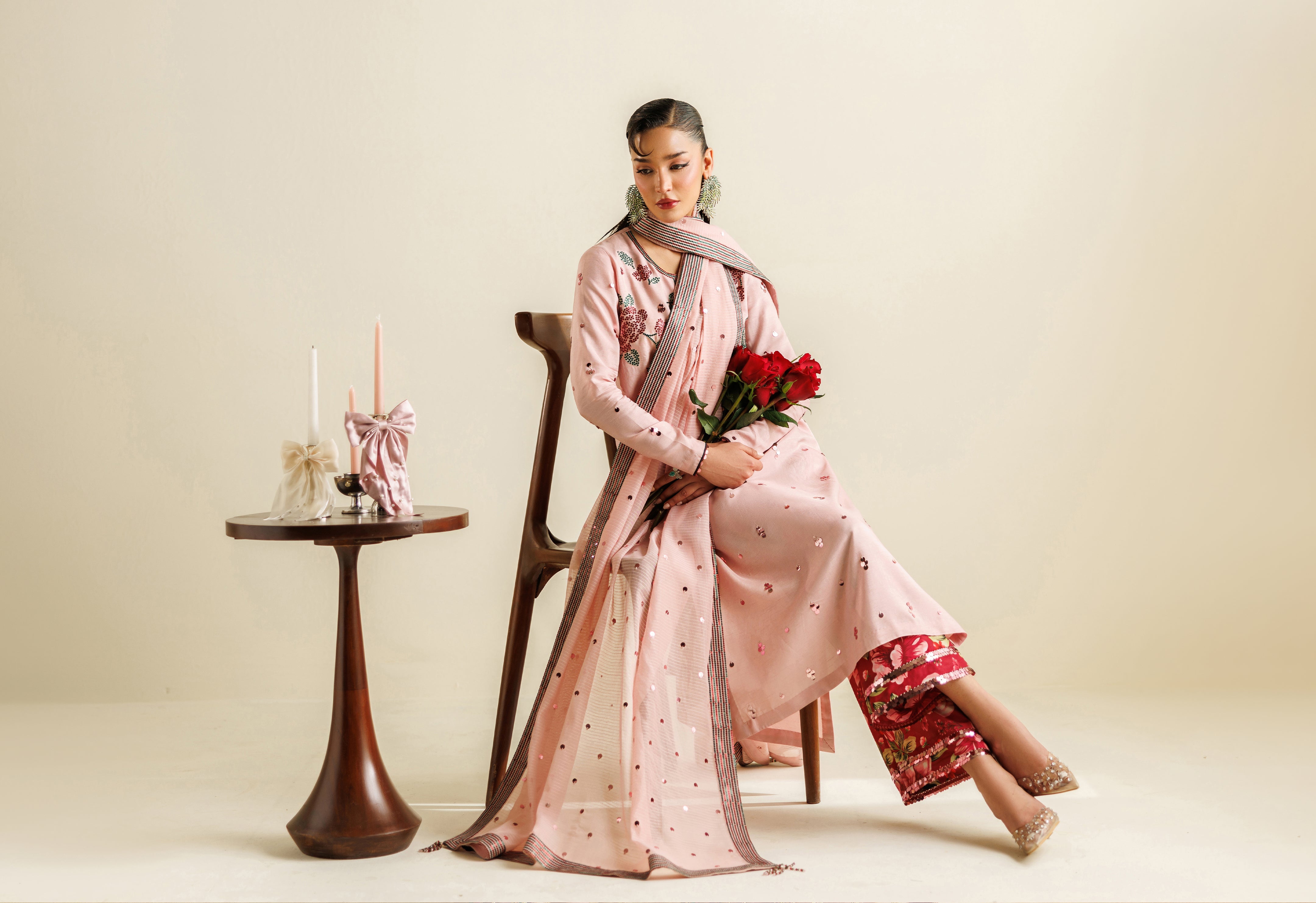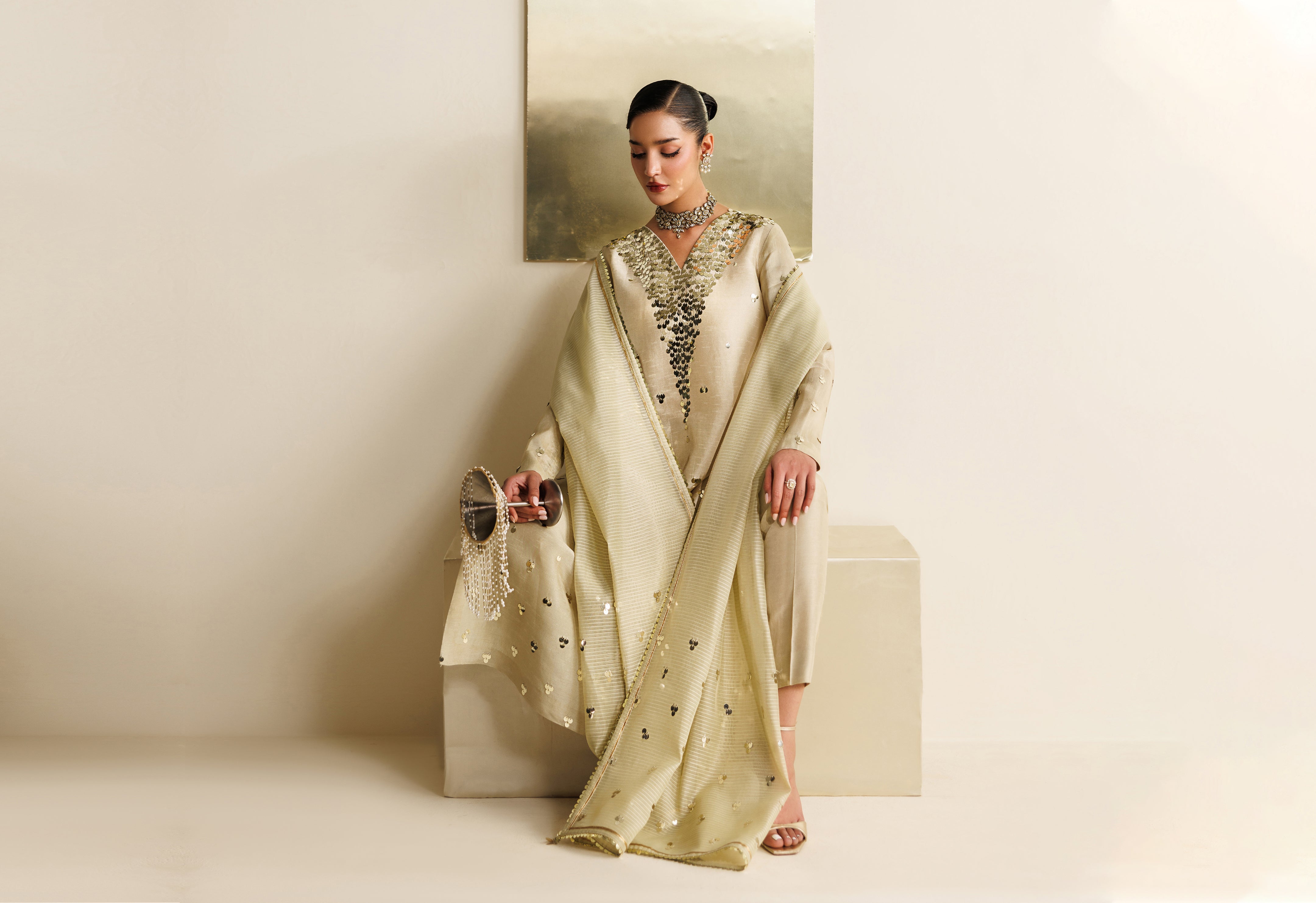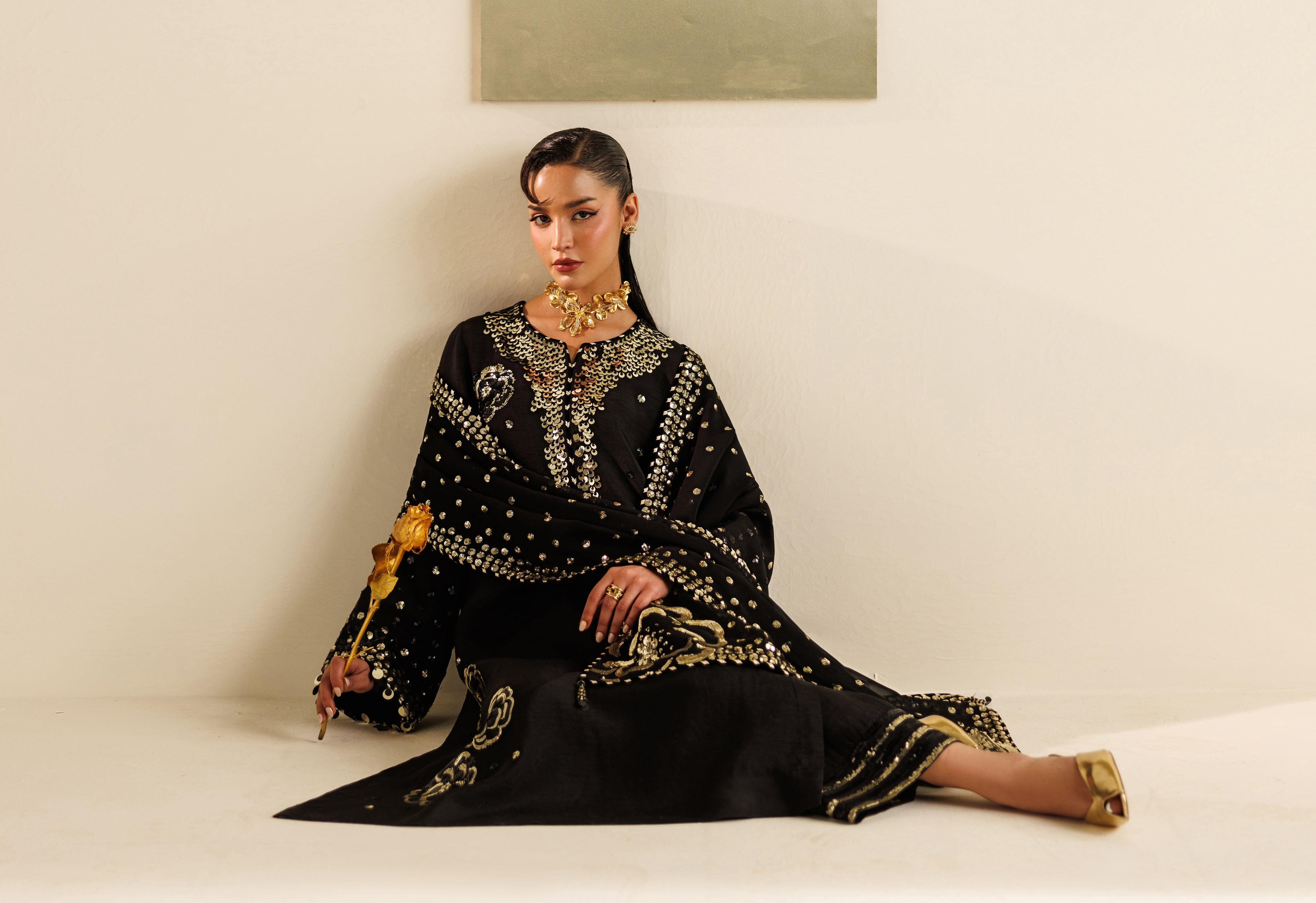
In the world of formal wear fabrics, multiple options lead the formal wear fashion, but raw silk fabric is one of the leading fabrics in the formal fashion industry, having been used to create masterpieces. It is considered as the backbone of formal wear fashion because of its silky and luxurious appearance. Rawsilk fabric provides all the modernity, comfort and luxe.
The core of pure rawsilk
The rawsilk fabric collection doesn't have a smooth and silky texture; it has a grainy and restrained structure. It has a beautiful yet structured drape. It gives a composed look, but is slightly fluid. Its shiny appearance makes it stand out from the rest of the formal wear fabric options, and it is a great choice for silk formal wear for international pakistani audiences, delivery worldwide.
Understanding the fibre:
All silk begins with the silkworm cocoon. What differentiates premium raw silk is not only the origin, but also how the fibre is treated after harvesting.
Silk filaments are naturally coated in sericin, a protein that binds fibres together. In many luxury silks, this coating is almost entirely removed to achieve softness and shine. Raw silk, however, often retains a portion of this natural element, contributing to its signature look.
Key factors at this stage include:
- filament length and strength
- cleanliness of reeling
- consistency of fibre thickness
- balance between softness and rigidity
Rawsilk: An ultimate choice for the Pakistani festive season
From Silk Cocoon to Yarn: How Raw Silk Gets Its Texture
Once cocoons are softened and unwound, silk filaments are twisted and combined to form yarn. This stage is crucial in defining whether the silk will feel fluid, crisp, or textured.
Raw Silk Yarn Characteristics
- slightly thicker than satin silk yarn
- less uniform (intentionally)
- higher tensile strength
- capable of holding shape
Premium raw silk yarn is engineered, not accidental; its texture is controlled, not coarse.
Poor-quality raw silk often comes from:
- broken filaments
- excessive short fibres
- uneven twisting
- rushed processing
These flaws show up later as roughness, weak spots, or poor drape.
Luxury Dresses Online – Raw Silk & Lawn Collection
Raw Silk Fabric GSM: What It Means and Why It Matters
GSM (grams per square meter) measures fabric weight and is one of the most important, yet least discussed, indicators of raw silk quality.
Common Raw Silk GSM Ranges
Lightweight Raw Silk (80–100 GSM)
- suitable for overlays or lighter formals
- Less structure
- Less drape
- Suitable for lining and inner wear
Medium-Weight Raw Silk (110–130 GSM)
- ideal balance of structure and comfort
- most commonly used in premium formal wear
- supports embroidery well
- holds silhouettes cleanly
Heavyweight Raw Silk (140–160+ GSM)
- very structured
- rich, architectural appearance
- excellent for heavy embellishment
- commonly used in winter formals and statement outfits
Why GSM Is Critical in Formal Wear
Higher GSM raw silk:
- resists sagging under embroidery
- maintains shape over long wear
- photographs better
- feels more “luxurious” to the touch
Lower GSM fabrics may look fine initially, but often lose structure, crease harshly, or distort with embellishment.
Premium raw silk for formal wear usually falls between 120 and 150 GSM.